
Real impact starts where human presence ends.
A perspective by Francis Latulippe, Chief Technology Officer • May 2026
Predictive maintenance has been a buzzword for a long time. If you’ve been in industrial tech for the past decade, you’ve heard the pitch a hundred times: put sensors on your equipment, run the data through an algorithm, and predict failures before they happen. Reduce downtime. Cut costs. Optimize.
That pitch was real, and the results have been real too. But here’s what I’m seeing now: the companies doing the most interesting work in predictive maintenance aren’t focused on optimization anymore. They’ve moved past the low-hanging fruit. The new frontier isn’t about monitoring the equipment you already have eyes on. It’s about deploying intelligence in places where sending a human is dangerous, impractical, or simply no longer acceptable.
The Low-Hanging Fruit Has Been Picked
Let’s be honest about where we are. For most mining operations, the first generation of predictive maintenance has already been deployed, or at least piloted. Vibration sensors on crushers. Temperature monitoring on conveyor bearings. Oil analysis on haul trucks. These are well-understood applications. The business case is proven. A vibration-monitoring node that cost $600 per point in 2019 can now be deployed for under $50 per point. The technology has matured to the point where not doing it is hard to justify.
But that’s exactly the point. When something becomes table stakes, it stops being a differentiator. The question for equipment manufacturers and operators isn’t whether to do predictive maintenance. It’s where to take it next.
The New Use Cases Are in the Danger Zone
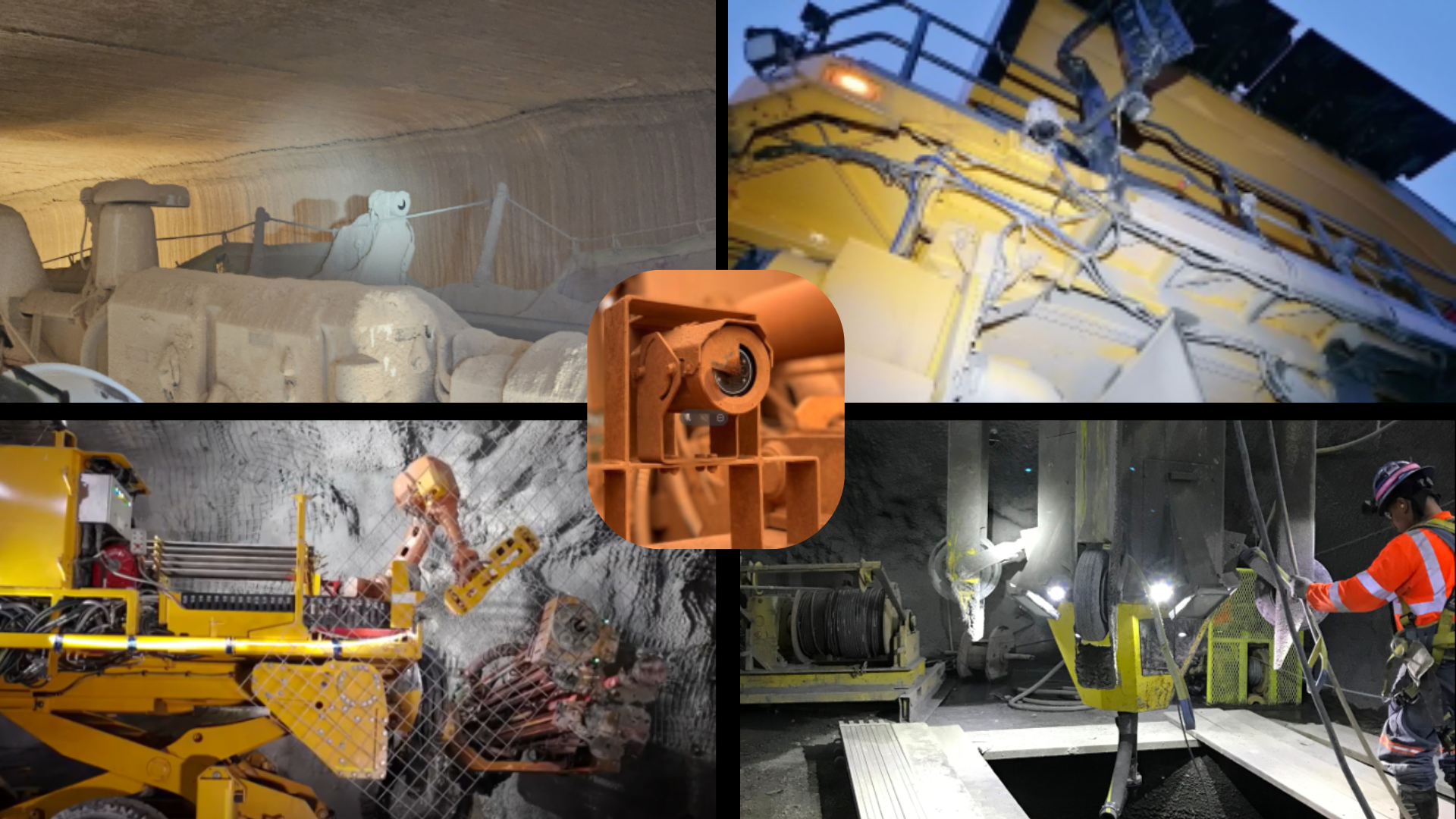
The most compelling predictive maintenance projects I’m involved in right now don’t look like the ones from five years ago. They’re not about putting a sensor on an accessible piece of equipment and reading the data on a dashboard. They’re about deploying monitoring capabilities in environments that are genuinely hostile to humans: underground stopes with poor ventilation, tailings dams that require constant structural monitoring, confined spaces with toxic gas exposure risks, or remote infrastructure where sending a technician can take days and requires serious safety planning.
In these contexts, predictive maintenance isn’t an optimization play. It’s a safety play. It’s the difference between sending a person into a hazardous environment to do a visual inspection and having a camera, a sensor array, and an AI model do it remotely, around the clock, without exposure risk.
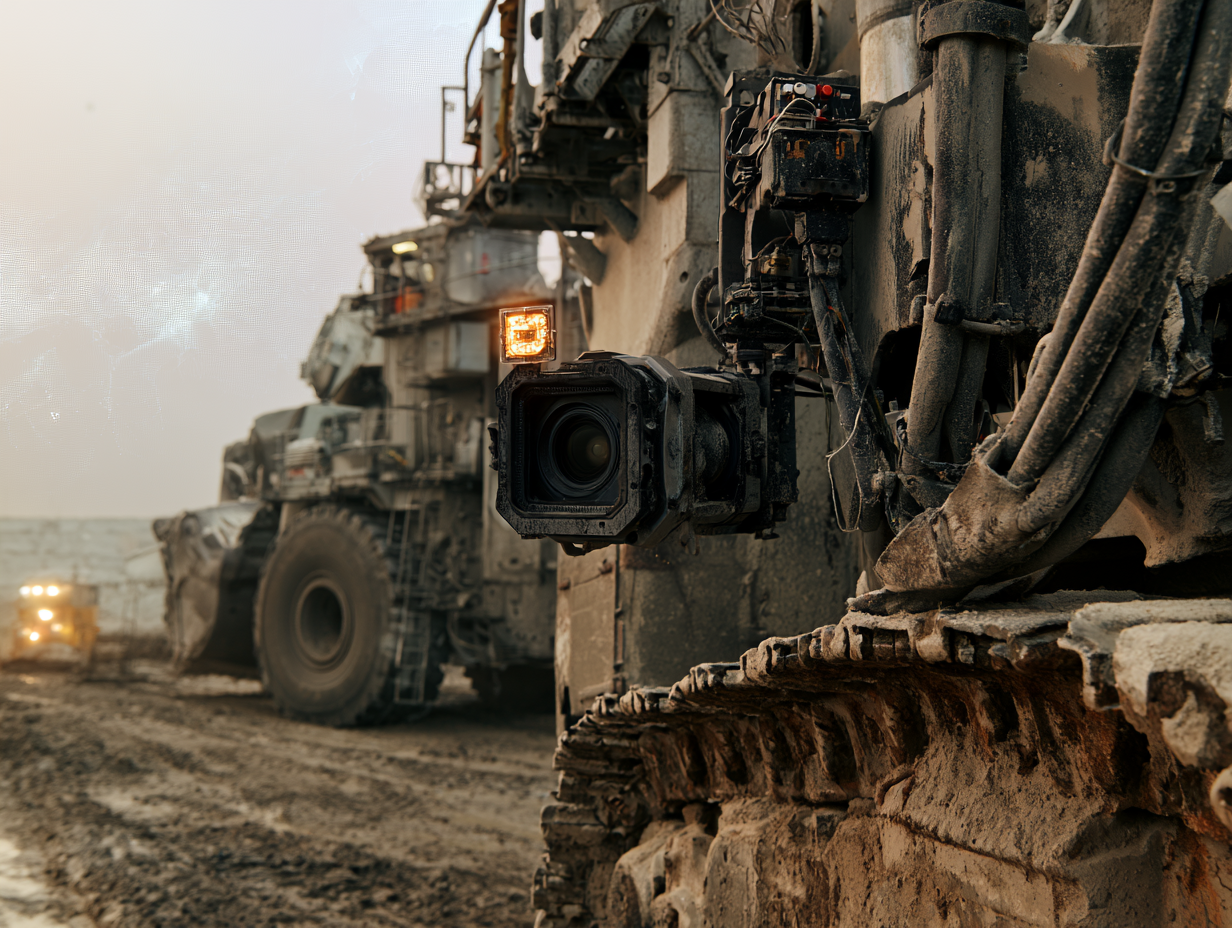
The sensor landscape has caught up to this ambition. We’re seeing new generations of ruggedized cameras, multi-spectral sensors, and edge AI devices specifically designed for harsh, remote, and confined environments. Combined with advances in connectivity — LoRaWAN, private 5G, mesh networks — it’s now possible to build monitoring systems in places that were simply off-limits to electronics a few years ago.
Sense, Understand, Predict
The way we think about this next generation of predictive maintenance is in three layers: sense, understand, and predict.
Sense means deploying the right combination of sensors and cameras into complex environments. This isn’t just vibration and temperature anymore. It’s visual inspection via AI-enabled cameras, gas and particulate detection, acoustic monitoring for structural integrity, and ground deformation tracking. The sensing layer is getting richer, more diverse, and more suited to the specific hazards of each environment.
Understand means processing that data locally and in the cloud to build a real picture of what’s happening. Edge computing is critical here. In an underground mine, you can’t always rely on a stable connection to the cloud. The intelligence has to live as close to the sensor as possible. TinyML and edge AI models are making it feasible to run meaningful inference on low-power devices deployed deep in the mine.
Predict is where the value compounds. Once you’re continuously sensing and understanding, you start seeing patterns that no human inspector could. Slow ground movement over weeks. Gradual degradation of structural elements. Subtle changes in equipment behaviour that precede catastrophic failure. For the first time, you can see what was always there but never detectable: slow drift, micro-degradation, the quiet signals that precede failure.
AI as a Skill Amplifier, Not a Replacement
There’s a narrative out there that AI will replace human expertise in the field. In mining, that’s not how it works, and frankly, it’s not what’s needed. What’s needed is to take the knowledge that experienced engineers and technicians carry in their heads and extend it to places and scales that a human body can’t reach.
Think of it this way: your best maintenance engineer can walk up to a piece of equipment, listen to it, feel the vibration, look at the wear patterns, and tell you what’s going to fail. That skill is real, valuable, and irreplaceable. But that engineer can only be in one place at a time, can only work so many hours, and shouldn’t be sent into a confined space with unknown atmospheric conditions just to check on a pump.
IoT and AI don’t replace that expertise. They amplify it. They let that engineer “be present” in twenty locations simultaneously, through sensor feeds interpreted by models trained on their domain knowledge. They extend human judgment into environments where human presence is either too risky or too expensive. That’s the real proposition of this next wave: not fewer people, but smarter, safer deployment of the people you have.
Integration, not AI, is where most projects stall.
If you’re an equipment manufacturer or a mining operator looking into this space, here’s what I want you to know: the hardest part isn’t building a machine learning model. Models are abundant. The hard part is the full-stack integration problem: selecting the right sensor for a specific hazard and environment, designing hardware that survives underground conditions, building a connectivity layer that works in places with no infrastructure, running inference at the edge with constrained power and compute, and packaging all of this into a product that field teams can actually deploy and trust.
This is as much an IoT and embedded systems challenge as it is an AI challenge. And the companies I see succeeding are the ones that treat it as a product development problem, not a data science project.
What This Means for Equipment Manufacturers
If you manufacture equipment for mining — drills, ventilation systems, pumps, conveyor components, ground support systems — the opportunity here is significant. Your customers are being asked to operate in increasingly regulated and safety-conscious environments. They need monitoring solutions for places they currently inspect manually, infrequently, or not at all.
The manufacturers who build intelligent, connected monitoring into their products as a core feature will define the next generation of mining equipment. The ones who wait will find themselves competing on price for commodity hardware while someone else owns the data and the relationship.
And the window is open now. Most competitors are still in pilot mode or talking about it at conferences. Few have shipped production-ready connected products. The gap between announcement and deployment remains wide. That’s an opportunity.
This Is What We Do at Axceta
Axceta is an agile R&D team with deep expertise in IoT, embedded systems, connectivity, and physical AI. We help equipment manufacturers and mining operators design, build, and ship the next generation of monitoring and predictive maintenance systems, including the hard ones, in the environments where it matters most.
If you’re thinking about extending your product line into smart monitoring for harsh environments, or if you’re an operator who needs to bring intelligence to places where sending people is no longer the right answer, we should talk.
Reach out atfrancis.latulippe@axceta.com