By Francis Latulippe, Chief Technology Officer
For a long time, when people talked about computer vision in industry, they pictured highly structured assembly lines: a part passes in front of a camera, an algorithm checks that it’s compliant, then it moves on to the next one. Simple, efficient, and above all predictable. The environment was controlled, lighting conditions were fixed, objects were always in the same place.
That model still exists, and it works very well for what it does. But it now represents only a fraction of what computer vision can do today.
What industrial sites are looking to see now
The classic use cases have been around for years: detecting equipment wear, monitoring perimeter security breaches, identifying anomalies on conveyors, managing blind spots around heavy vehicles. These applications have proven themselves.
What’s changing is that computer vision is starting to be applied to far less controlled environments: complex workspaces, open-air sites, situations where conditions are constantly evolving. And the questions being asked of these systems are becoming more sophisticated: is a worker exhibiting risky behaviour? Is this manufacturing process subtly drifting from the norm? Is there a quality assurance issue at a step that can’t easily be automated?
We’re moving from a logic of binary detection — present/absent, compliant/non-compliant — to a logic of observation and interpretation. This is a significant shift, both technically and in terms of the value it can generate.
The real debate: process at the edge or in the cloud?
One of the questions we get asked most often is: should we process images at the edge, directly on the camera, or send them to the cloud?
The honest answer is: it depends, and often the best solution combines both.
Here’s how I explain it. The closer you get to the cloud, the more computing resources you have available. But that power comes at a cost: dependence on connectivity and bandwidth. If your network is unstable or saturated, processing time increases, and in some cases that can have real consequences. On a conveyor sorting parts at high speed, a few extra seconds of latency means defective parts slip through.
Edge processing, by contrast, performs the analysis directly on site, without depending on an external connection. Processing is faster, and you’re not at the mercy of a failing Wi-Fi tunnel in a mine corridor or an intermittent cellular network out in a field.
But the edge has its limits too. The computing power available on an embedded device is more limited. And as vision models become more complex, that matters more.
What we advocate at Axceta is a hybrid approach: process what’s urgent and real-time at the edge, and send consolidated data, selected images, and alerts requiring deeper analysis up to the cloud. It’s a bit like the principle behind OTA updates in IoT: intelligently distinguishing what happens locally from what needs to be shared. This gives you the best of both worlds: the responsiveness of the edge and the accessibility and power of the cloud for users who need to see the full picture.
The industries that benefit most from edge vision
This model is particularly relevant in sectors where connectivity isn’t guaranteed, and that’s where we’re seeing edge computer vision advance the fastest.
In Agtech, fields are vast and cellular networks are often weak or nonexistent. Analyzing crop health imagery, detecting infestations or water-stress zones in real time requires processing the data on site.
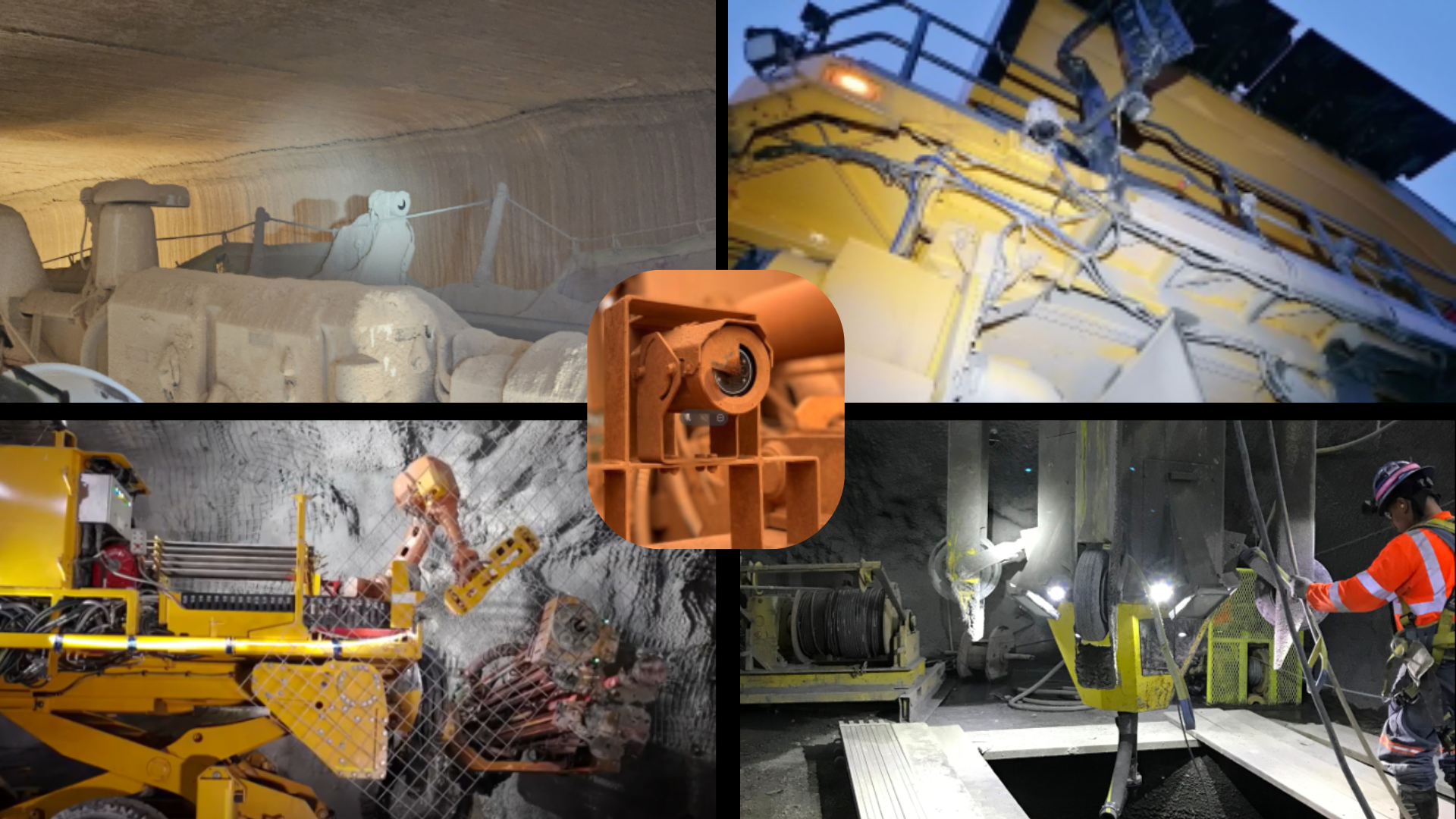
In mining, network conditions, underground or at remote sites, are by definition unpredictable. Even at the surface, network infrastructure on job sites varies considerably from one site to another.
And even in more conventional industrial environments, we often find ourselves in situations where the network is available but not reliable: assembly lines with heavy electromagnetic noise, older buildings whose network infrastructure wasn’t designed to carry continuous video streams.
There’s also a purely practical argument: when the volume of data to process is too large, edge processing becomes almost essential. Take remote surveillance: sending hours of raw video to the cloud to analyze 2% of it is inefficient and costly. Instead, we do an initial screening at the edge and only send up the relevant footage.
Hardware: choosing based on context
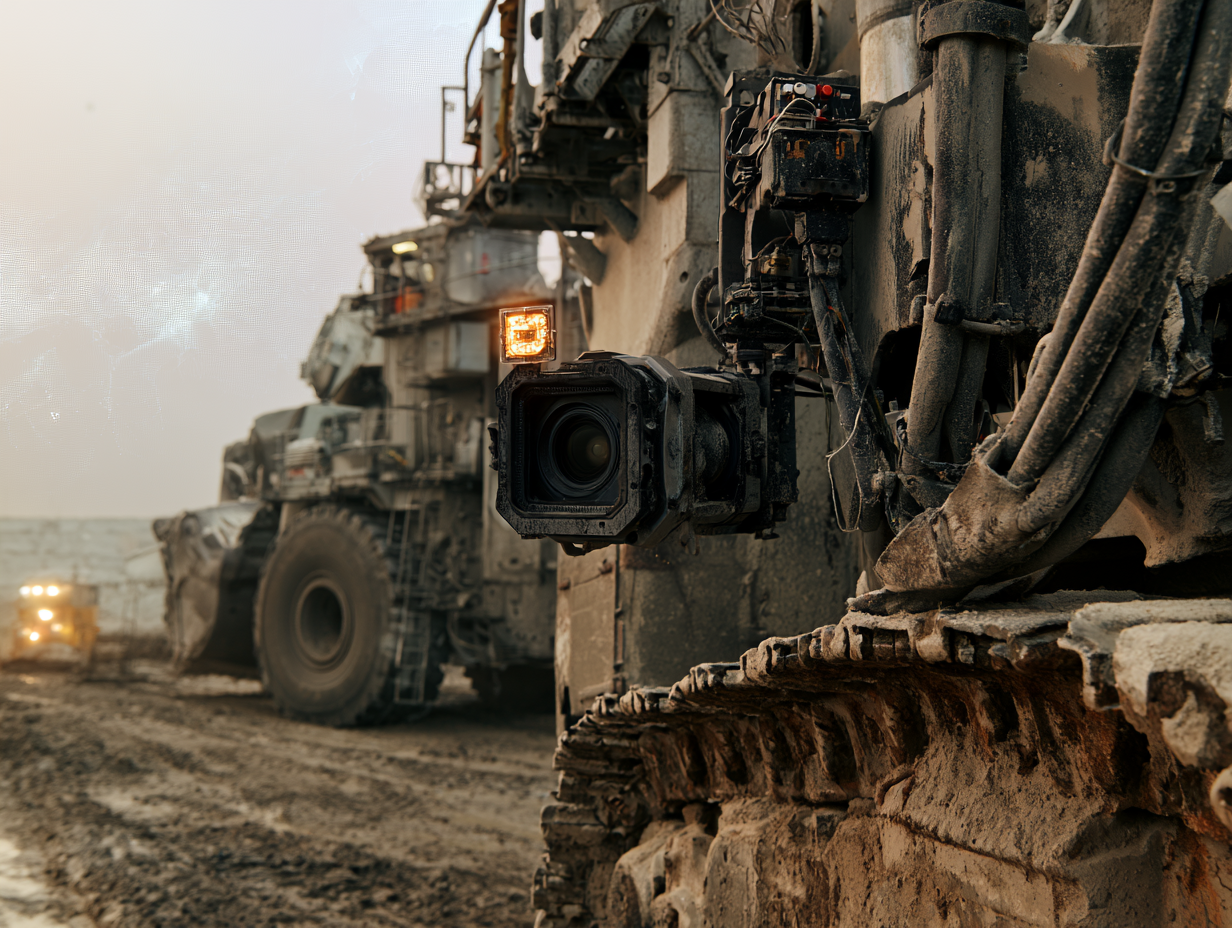
There’s now an interesting range of hardware designed for computer vision in harsh environments. Some manufacturers offer cameras already ruggedized for cold, dust, and vibration. Products like those from Excelsense perform well under these conditions. For embedded computing power, NVIDIA’s Jetson series remains the market standard for edge inference. There are also serious Quebec-based manufacturers within this ecosystem, which is appealing for companies wanting a local supply chain.
Hardware choice always comes down to context: what frame rate is required? How complex is the model you want to run? What are the site’s environmental conditions? There’s no one-size-fits-all answer.
Axceta’s role: delivering solutions that perform in the field
At Axceta, computer vision is a natural extension of what we do: designing and operationalizing connected physical solutions for industry. We’re not a manufacturer, and we don’t sell hardware for its own sake. Our role is to help our clients choose the right combination of cameras, processors, and models to build a solution that actually works in the field and keeps working long-term.
What sets us apart is that we combine field expertise in demanding environments (mines, agricultural sites, industrial facilities) with the ability to quickly de-risk the problem, accelerate development, and optimize operating costs once in production.
To make this concrete: at a recent mining site, an edge vision system detected overheating on a conveyor surface 40 minutes before it would have caused an unplanned shutdown. The detection happened locally, without going through the cloud, because in that underground corridor there simply was no reliable connectivity. That’s exactly the kind of value this technology can deliver when properly deployed.
In the next article in this series, we’ll cover an obstacle many teams discover too late: most computer vision deployments fail before they even run, not because of the algorithms, but because the cameras and sensors don’t survive real-world field conditions. We’ll talk about harsh environments and the hardware solutions built specifically to withstand them.
In the meantime, if you have questions about what a computer vision solution could do for your environment, feel free to contact me directly.